
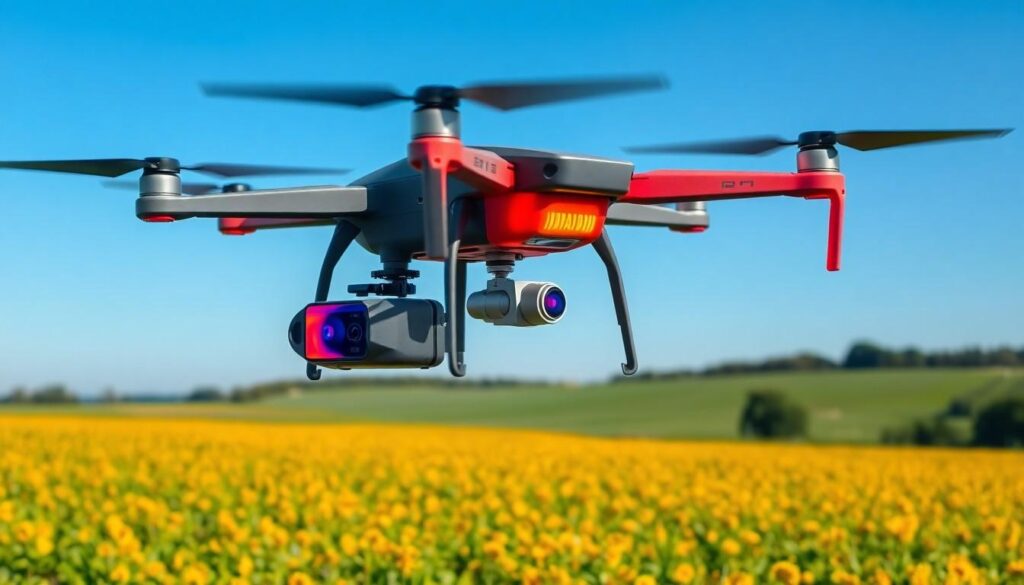
Imagine soaring through the skies with a bird’s-eye view, all while wielding the superpower of thermal vision. That’s what a thermal camera for drones offers—an innovative tool that turns ordinary aerial photography into a high-tech adventure. Whether it’s spotting wildlife in dense forests or detecting heat leaks in buildings, these cameras transform the way people see the world from above.
But wait, there’s more! These nifty gadgets don’t just make you feel like a superhero; they also save time and money in various industries. From search and rescue missions to agricultural monitoring, the applications are as vast as the sky itself. So buckle up and get ready to explore how thermal cameras can elevate drone technology to new heights, making every flight not just a journey, but an experience packed with insights and excitement.
Overview Of Thermal Cameras For Drones
Thermal cameras for drones offer unique capabilities by capturing infrared radiation. This technology enables operators to visualize temperature differences, which is crucial for various applications. Detecting wildlife becomes more achievable, as animals emit heat signals often invisible to the naked eye.
Search and rescue missions significantly benefit from these cameras, detecting body heat during nighttime operations or challenging conditions. Agricultural monitoring finds immense value in thermal imaging, allowing farmers to assess crop health by identifying water stress efficiently.
Various industries leverage thermal cameras to enhance operational effectiveness. Infrastructure inspections gain precision when identifying heat leaks in buildings, improving energy efficiency. Environmental monitoring also relies on this technology, tracking changes in land and vegetation health through thermal signatures.
The integration of thermal cameras into drone systems varies based on models and features. Some cameras support high-resolution imaging, while others focus on compact designs for lightweight drones. Different thermal sensors cater to specific user requirements, ensuring versatile applications across sectors.
Cost factors play a vital role in the selection of thermal cameras for drones. Budget-friendly options provide basic functionalities, while high-end models enable advanced analytics for professional use. Users should consider mission objectives when choosing the best system for their needs.
Overall, thermal cameras enhance operational capabilities across numerous fields, revolutionizing how users achieve aerial insights. Their growing popularity reflects a trend toward integrating innovative technologies in drone operations.
Benefits Of Using Thermal Cameras
Thermal cameras for drones offer numerous advantages, improving diverse applications through advanced technology.
Enhanced Safety
Using thermal cameras significantly enhances safety during aerial operations. They reveal hidden dangers in low-visibility environments, such as smoke or fog. Search and rescue missions benefit greatly from this capability, as these cameras locate missing persons quickly by detecting body heat. Inspections of infrastructure also become safer, enabling operators to spot heat leaks and electrical malfunctions before they escalate. Emergency responders rely on thermal imaging to assess situations accurately, ensuring the safety of both the team and the public. Overall, integrating thermal cameras into drone systems promotes safer practices across various industries.
Improved Efficiency
Efficiency improves when utilizing thermal cameras for drone applications. These cameras enable quick assessments by visualizing temperature differences, expediting inspections in agriculture and construction. Monitors detect issues like crop stress or building inefficiencies swiftly, allowing for timely interventions. Energy audits can happen faster, decreasing downtime and resource expenditure during inspections. Moreover, real-time data collection aids in precise decision-making, minimizing human error and boosting productivity. Operators experience less fatigue since drones equipped with thermal cameras cover large areas without requiring constant ground support. Overall, these cameras streamline workflows, yielding considerable time and cost savings.
Key Features To Consider
Selecting a thermal camera for drones involves understanding several key features that significantly impact performance.
Resolution and Sensitivity
Resolution plays a crucial role in image clarity. Higher resolution cameras yield sharper images, allowing users to detect finer temperature differences. Sensitivity directly influences a camera’s ability to pick up subtle temperature variations. Cameras with high sensitivity can identify smaller temperature changes, providing more detailed assessments for tasks like identifying heat leaks or monitoring wildlife. For optimal performance, consider resolutions of at least 320×240 pixels, as this standard balances quality and cost effectively.
Field Of View
Field of view determines how much area a thermal camera covers in a single frame. A wider field of view allows users to capture broader scenes, which proves beneficial during inspections or monitoring activities. Commonly, thermal cameras offer fields of view ranging from 30 to 90 degrees. Cameras with wider angles can quickly scan large areas, enhancing efficiency in tasks such as surveying landscapes or searching for missing persons. A careful selection based on specific operational needs ensures maximum utility during drone flights.
Popular Thermal Cameras For Drones
Many effective thermal cameras for drones have become available, tailored to various operational needs and budgets.
Camera A
The FLIR Vue TZ20 stands out with its dual thermal sensors. This camera provides precise depth perception and spatial awareness, crucial for search and rescue missions. Featuring a 640×512 resolution, it captures sharp thermal images, aiding in identifying heat sources from considerable distances. Additionally, the camera’s compatibility with most drones enhances versatility during operations. Users benefit from easy integration, ensuring ready access to thermal data in demanding environments. With a weight of just 1.1 pounds, it remains lightweight and efficient. Ultimately, the FLIR Vue TZ20 proves an excellent option for professional drone operators focused on advanced analytics.
Camera B
The DJI Zenmuse XT2 combines thermal and visual imaging capabilities. This integrated camera elevates inspection efficiency, allowing users to switch between thermal and RGB views seamlessly. Delivering a resolution of 640×512 enables detailed thermal imaging, making it suitable for infrastructure monitoring and agricultural assessments. Its compatibility with the DJI Matrice series drones ensures robust performance in challenging conditions. Operators appreciate the streamlined user interface, which simplifies real-time data collection. Weighing only 1.1 pounds, the XT2 remains manageable during flights. Together, these features position the DJI Zenmuse XT2 as a leading choice for those seeking a powerful imaging solution.
Applications Of Thermal Cameras In Different Industries
Thermal cameras integrated with drones serve various industries, providing unique benefits that enhance operational efficiency.
Agriculture
In agriculture, thermal cameras assess crop health by detecting temperature differences. Farmers utilize these cameras to identify areas requiring irrigation or pest control. Thermal imaging reveals thermal variations that indicate moisture levels in the soil. Aerial surveys using drones equipped with thermal technology help monitor large fields quickly, enabling timely decisions. The ability to analyze plant stress through heat signatures ensures improved crop yields. Notably, farmers have reported productivity increases up to 20% due to better resource management facilitated by thermal imaging.
Search And Rescue
Search and rescue operations rely heavily on thermal cameras to locate individuals in challenging environments. These cameras detect body heat, making it easier to find people lost in dense forests or disaster-stricken areas. Drones equipped with thermal technology cover vast search areas more efficiently than ground teams, reducing response times significantly. Real-time data streaming allows rescue teams to assess situations without delay. In low visibility conditions, thermal imaging proves invaluable, identifying victims obscured by debris or foliage. This technology has led to successful recoveries within minutes, demonstrating its critical role in emergency situations.
Thermal cameras for drones are revolutionizing various industries by providing unparalleled insights and operational advantages. Their ability to visualize temperature differences not only enhances safety but also streamlines processes in agriculture and search and rescue missions. As technology continues to advance, the integration of high-resolution imaging and user-friendly features will further expand their applications.
Selecting the right thermal camera based on resolution and field of view is crucial for maximizing effectiveness. With options available for different budgets and operational needs, users can find a solution that suits their requirements. Embracing this innovative technology positions organizations to improve efficiency and achieve better outcomes in their respective fields.


